)%20(4)_edited.png)
Queen's Resident Research Day - Exploring the Burden of Ascites in Ontario Decompensated Cirrhosis Patients with Shadia
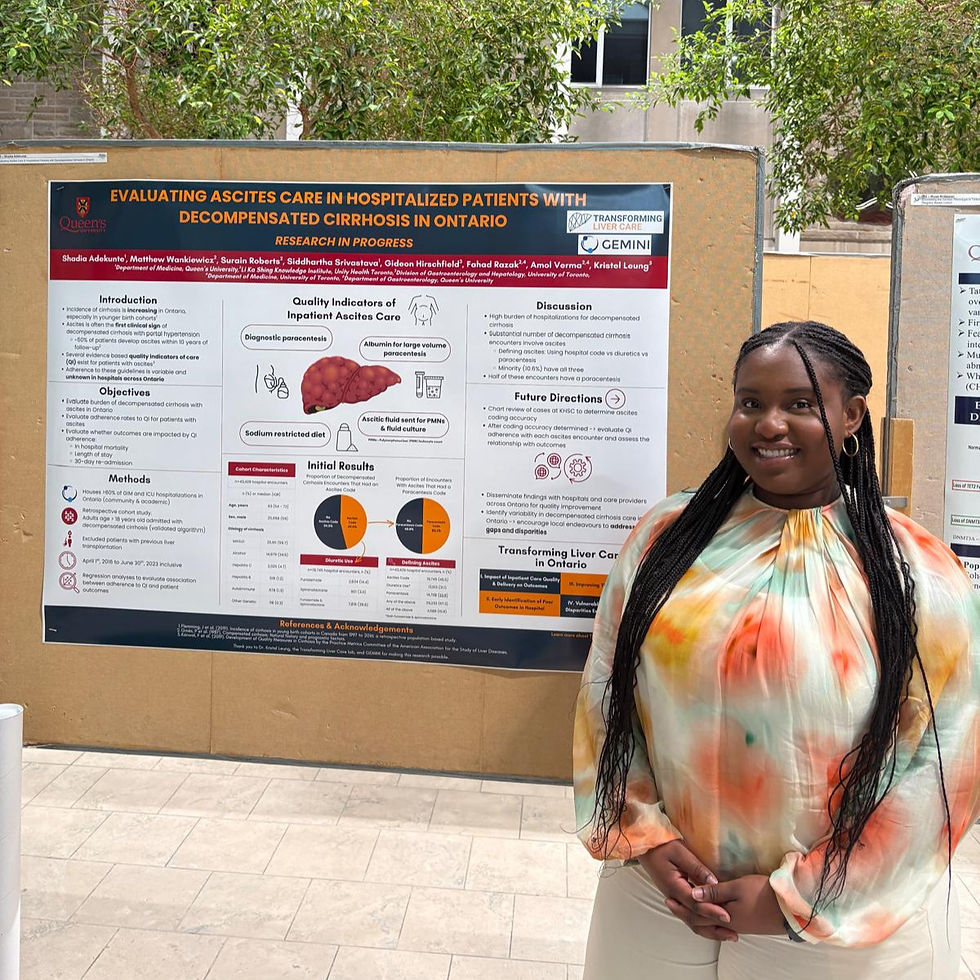
Resident Research Day at Queen’s University brought together core internal medicine residents, subspecialty residents, and fellows to share their latest research findings. Our stellar resident Shadia shared important updates on her work examining the burden of ascites among inpatients with decompensated cirrhosis in Ontario. Using the GEMINI database, her research sheds light on how frequently ascites care occurs during hospital admissions and sets the stage for future studies on care quality and patient outcomes.
Understanding Ascites and Decompensated Cirrhosis
Ascites is the abnormal buildup of fluid in the abdomen, a common and serious complication of decompensated cirrhosis. Decompensated cirrhosis refers to the stage of liver disease where the liver can no longer perform its functions properly, leading to complications like ascites, variceal bleeding, and hepatic encephalopathy. Managing ascites effectively is crucial because it impacts patient comfort, risk of infection, and overall prognosis.
Despite its importance, there has been limited large-scale data on how often ascites care is delivered during hospital stays and how this care affects patient outcomes.
Key Findings from the Data
Shadia’s analysis focused on hospital admissions for patients with decompensated cirrhosis. She identified ascites care by looking for specific hospital codes related to ascites, the use of diuretics such as furosemide and spironolactone, and procedures like paracentesis (fluid drainage).
The study revealed that ascites care was provided in 67% of admissions for decompensated cirrhosis, but only 50% of patients with codes for ascites also had a paracentesis coded for in hospital. This finding raises important questions about potential gaps in care delivery.
Why These Findings Matter
Variability in clinical practice may occur because of several factors:
Differences in hospital protocols or resources
Variation in physician awareness or training
Patient-specific factors such as severity of ascites or comorbidities
Understanding these factors is essential to improving care. If some patients are not receiving appropriate ascites management, they may face higher risks of complications like spontaneous bacterial peritonitis or worsening liver function.
Next Steps: Linking Care Quality to Outcomes
Shadia plans to extend her work by examining how the quality of ascites care affects patient outcomes. This will involve looking at metrics such as:
Length of hospital stay
Readmission rates
Mortality
Complication rates related to ascites
By linking care processes to outcomes, the research aims to identify best practices and areas needing improvement. This evidence can guide clinical guidelines and hospital policies to ensure more consistent and effective ascites management.


Comments